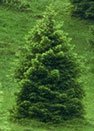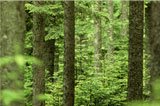
PINUS SILVESTRIS  

English:
German:
Spanish:
Pine - Redpine
Kiefer
pino silvestre

  ANATOMY  

Sapwood and heartwood differentiated
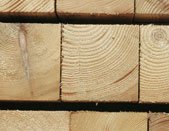
The heartwood is coloured, pinkish to pinkish brown – deep red brown knots and sometimes veins coloured by the resin
The sapwood is light coloured, yellowish, clearly delimited with a less pronounced veining
Presence of fine hardly visible resinous canals
Timber grain, in general, straight and rectilinear

  DURABILITY  

The heartwood of the Scots pine is naturally resistant to attack by wood fungi and insects.
The sapwood is very subject to blueing and has little durability.
Impregnation of the sapwood is very easy, whereas for the heartwood this is very difficult.
It is possible to achieve class IV for sawn timbers of Scots pines by means of autoclave impregnation.

  DENSITY  

this is dependent on the source and the growth conditions

  Density at 15 % moisture content (kg/m3)
  Majority of the timber Limit value according to source
Scots pine 500 - 700 kg/m3 400 - 800 kg/m3

  SHRINKAGE  

The retractability coefficient gives, as a percentage, the dimensional variation for a variation of one per cent of moisture content.

  Tangential coefficient of retractability
Radial coefficient of retractability
Unit volume coefficient of retractability
  (t) in % (r) in % (v) in %
Scots pine 0.20 to 0.35 0.10 to 0.20 0.40 to 0.50

Longitudinal shrinkage can be considered as being neglible

  THERMAL CONDUCTIVITY  

This is the heat flow per m2 through one metre of thickness of the material, for a difference of one degree between the two faces of the material.

  Density
in kg/m3
Thermal conductivity
in W/m°C
  350 to 500 0.12
Scots pine 500 to 600 0.15

  ACOUSTIC BEHAVIOUR  

The speed of propagation of sound in the timber at 15% moisture content

    Propagation of sound in m/sec
Scots pine longitudinally 4,700 to 5,000
transversally 1,000 to 1,100

  BEHAVIOUR TO FIRE  

Classification of materials
M0 = incombustible
M1 = not flammable
M2 = burns with difficulty
M3 = average flammability
M4 = burns easily
M5 = highly inflammable

Scots pine:
thickness greater than / equal to 18 mm = class M3
thickness less than 18 mm = class M4

  MECHANICAL CHARACTERISTICS  

Visual classification:
ST - III: type of use - traditional framework
ST - II: type of use - industrial framework, truss

Timber at a moisture content of 12%

Strength properties:

  ST-III ST-II
Bending 8.0 Mpa 10.5 Mpa
Compression parallel 8.0 Mpa 9.0 Mpa
Tension parallel 5.0 Mpa 6.0 Mpa
Longitudinal shear 0.8 Mpa 1.1 Mpa
Perpendicular compression 2.0 Mpa 2.3 Mpa
Perpendicular tension 0.15 Mpa 0.15 Mpa

Conventional deformation modulus:

  ST-III ST-II
Shear 550 Mpa 690 Mpa
Longitudinal, shear force included 10,000 Mpa 11,000 Mpa
1 Mpa = 1 MegaPascal
1 Mpa = approx. 10 kg/cm²